
The job
If this is your first time using Cutting Calculator, welcome! We’ve designed the software to be easy to pick up straight out of the box, but there are several ways to fine-tune it for better results. This is the first in a series of posts that walk you through the features that make a real difference.
Let’s look at a simple job — the kind that stockholders up and down the country do day in, day out:
203×102×23 Universal Beam
Require: 4 × 3000 mm
Available stock: 12200 mm bars
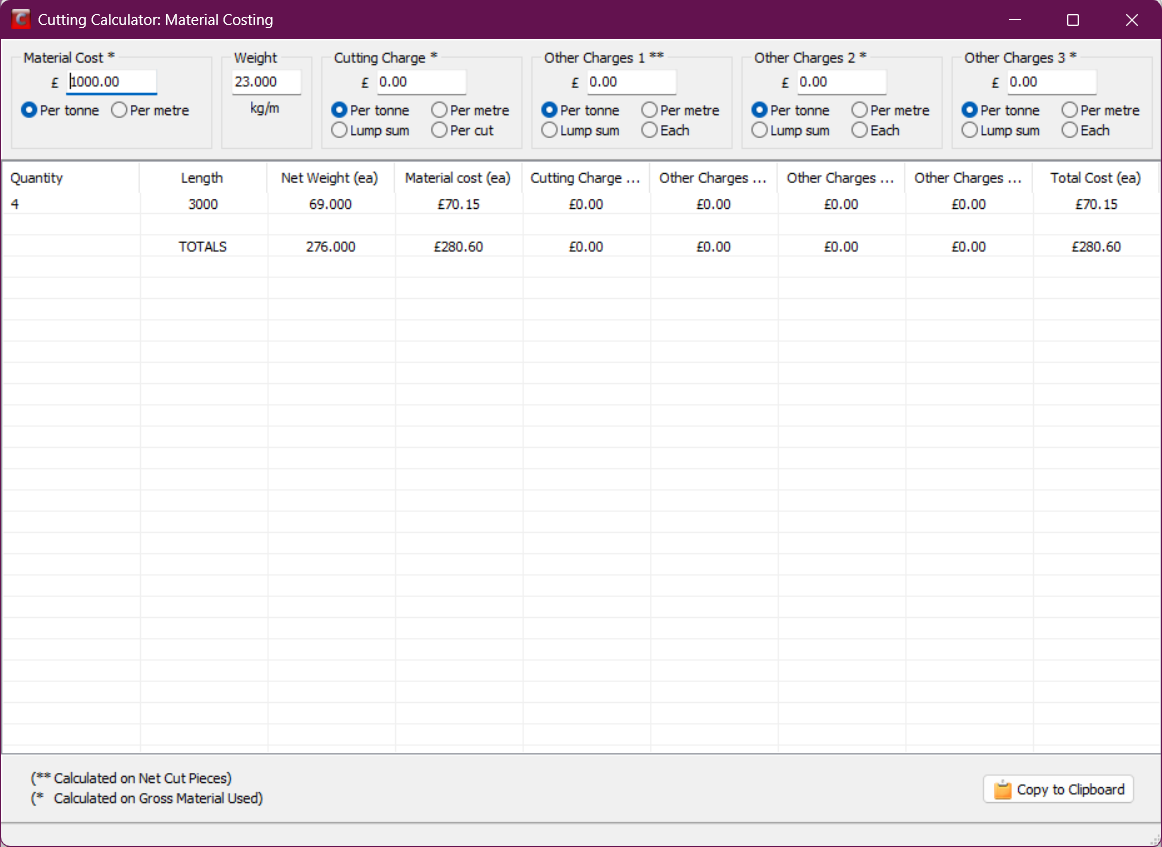
Cost: £1,000 per tonne
“Lego brick” optimisation
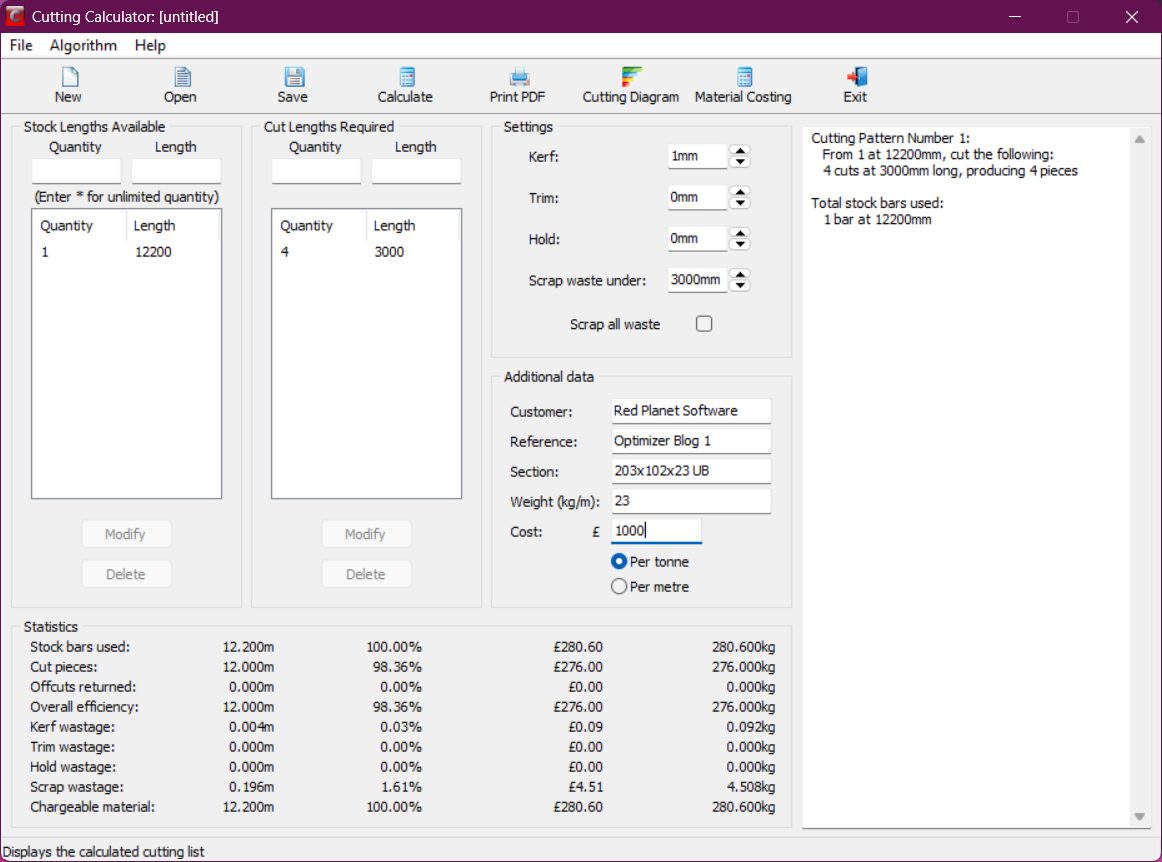
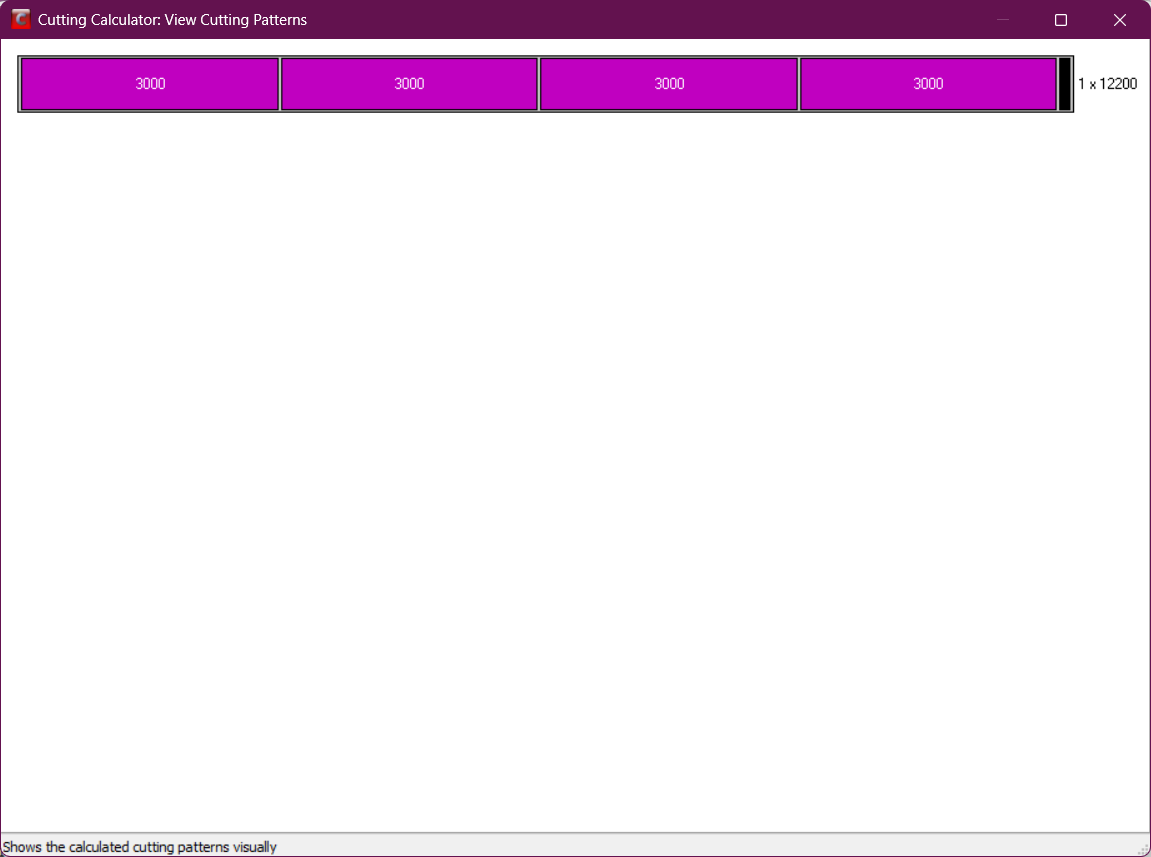
A quick bit of mental arithmetic says: “cut 4 × 3000 mm, that’s 12000 mm in total, from 1 × 12200 mm bar — scraps 200 mm.”
And that’s fair enough for this job. But we’re leaving no room for kerf, trim or hold allowances — in effect we’re playing with Lego, each piece butting up to the last with no gap.
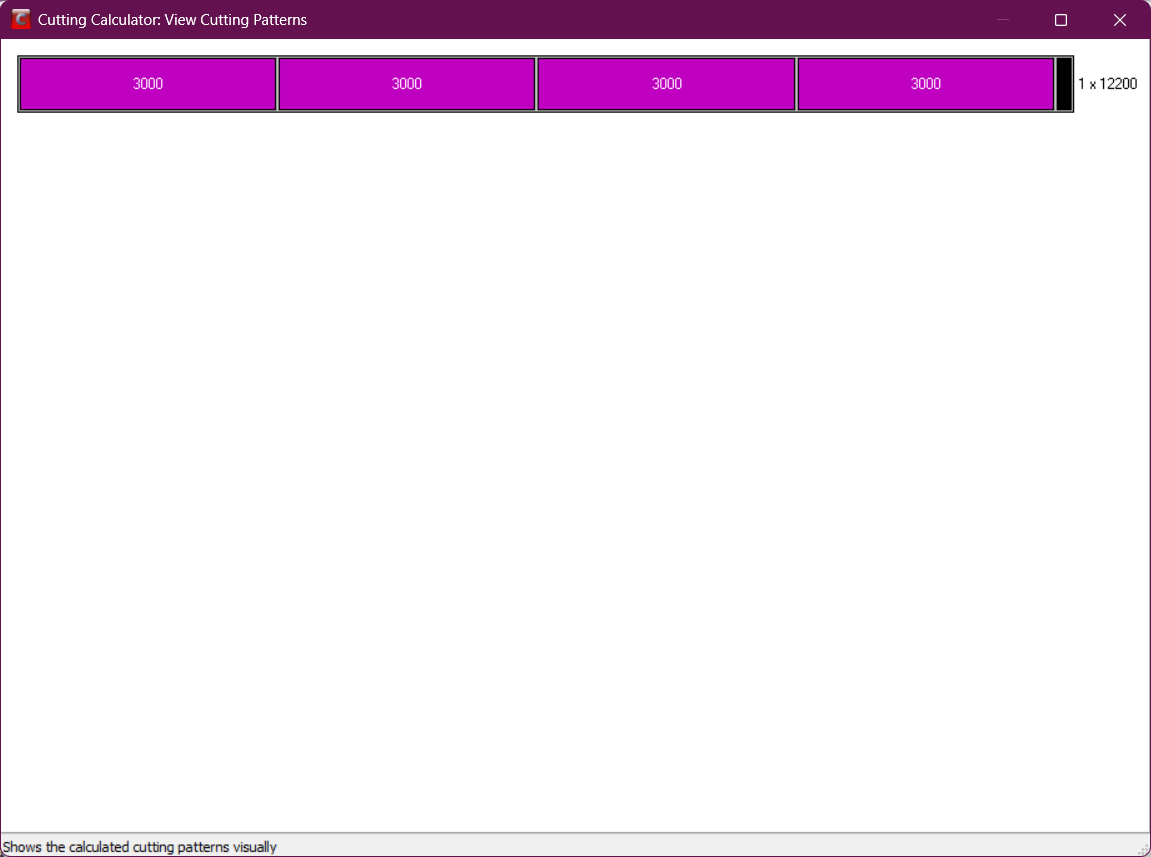
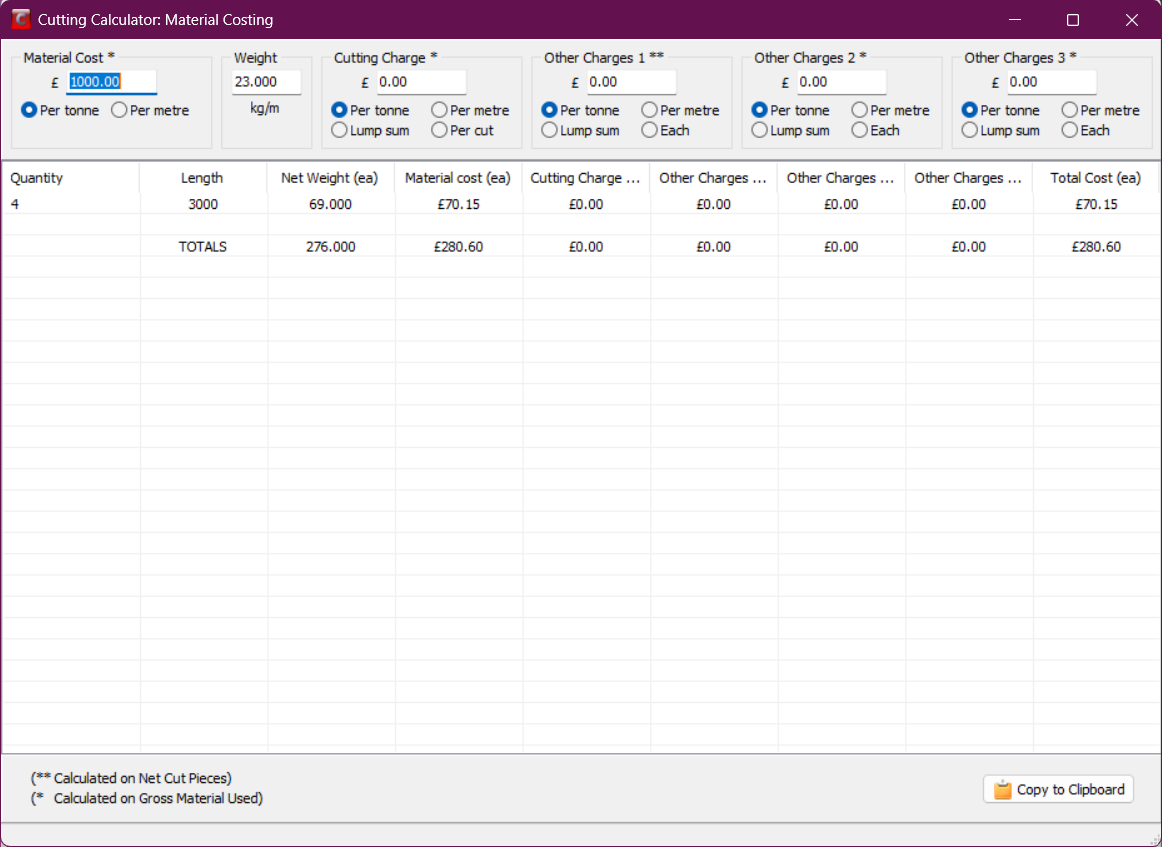
We can plug that into Cutting Calculator and confirm. The minimum kerf the calculator allows is 1 mm, but that’s close enough for this demo:
Adding real-world constraints
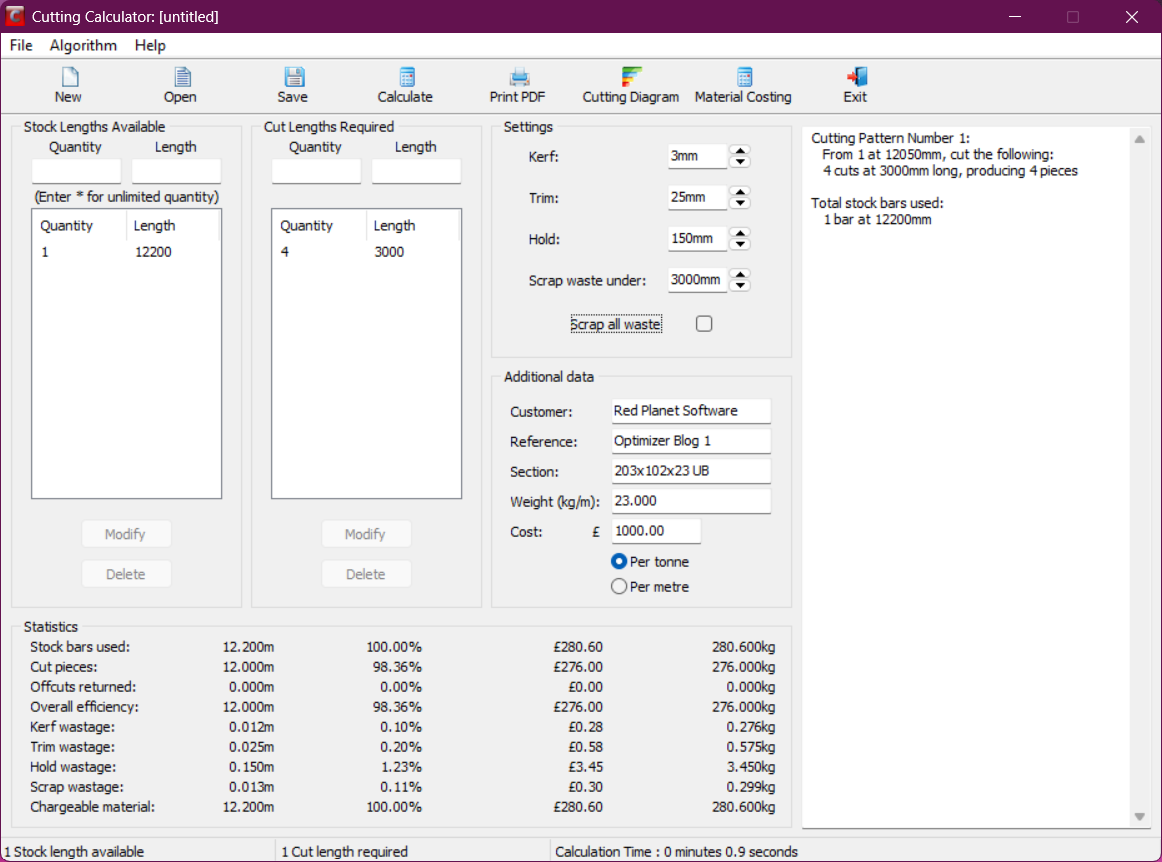
In practice, every saw has physical constraints that eat into the available length. Let’s inject some real-world parameters:
- Kerf (blade cut width): 3 mm
- Trim (rough bar end to remove): 25 mm
- Hold (grip needed for the last cut): 150 mm
Set those in the Settings area and recalculate. In this example it won’t change the result — we still get four pieces from one bar. But it’s close: just 13 mm to spare. If the required lengths were a few millimetres longer, the Lego-brick approach would have caught us out.
A bigger order
Now let’s say the customer asks for a larger, mixed-length order:
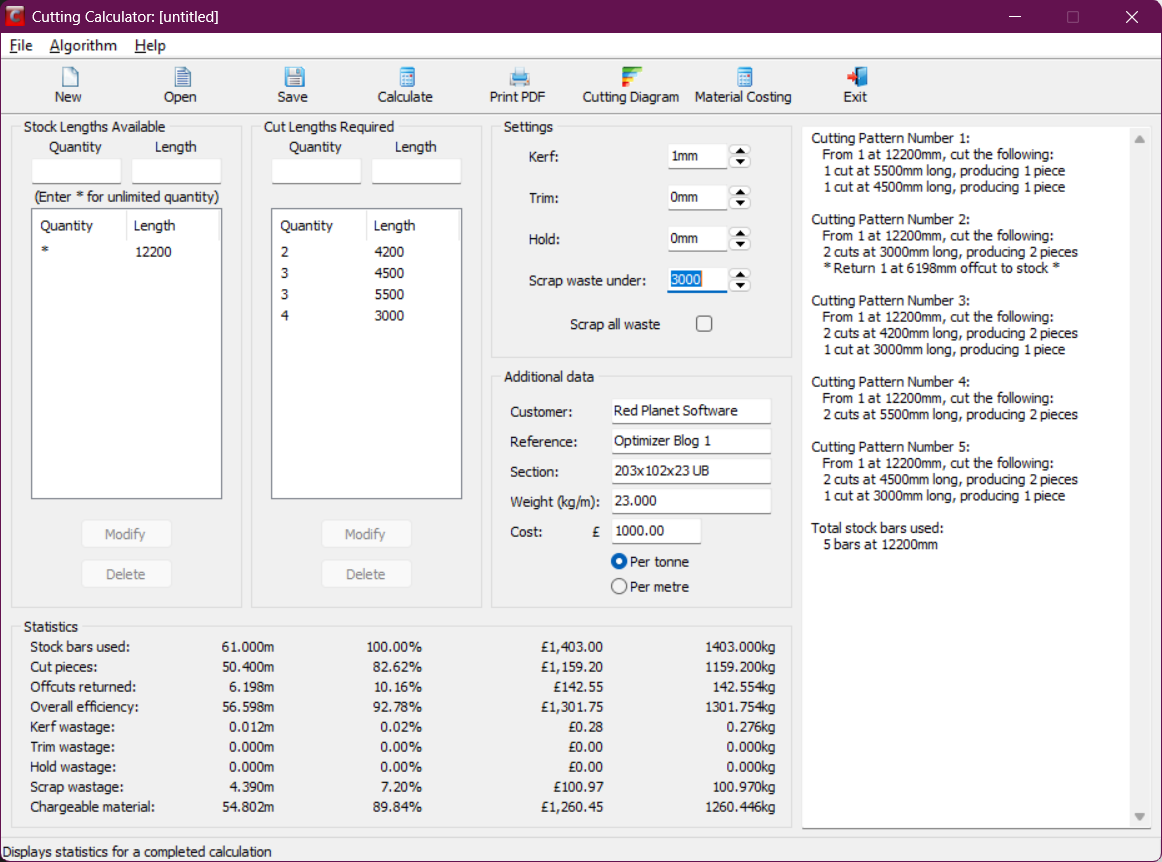
4 × 3000 mm | 2 × 4200 mm | 3 × 4500 mm | 3 × 5500 mm
We don’t know how many 12200 mm bars this will need, but there are plenty in stock, so we set the quantity to * (“unlimited”).
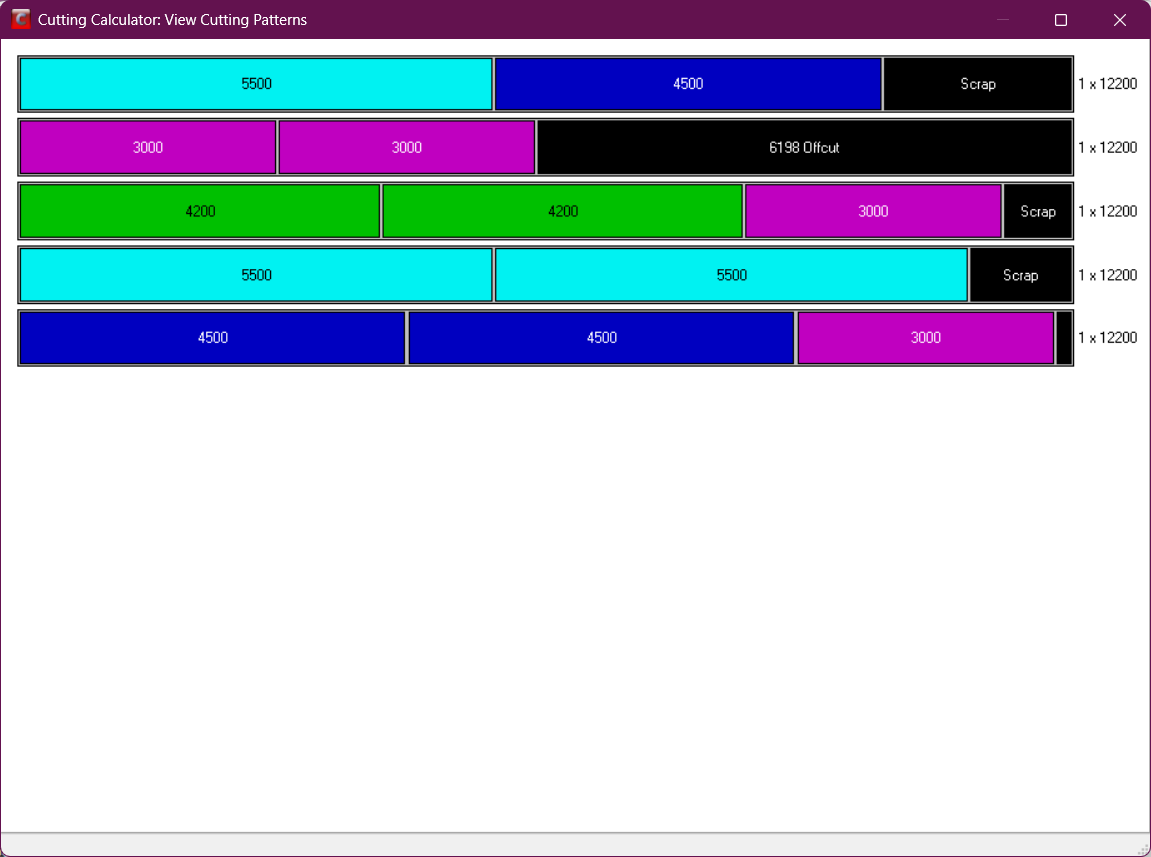
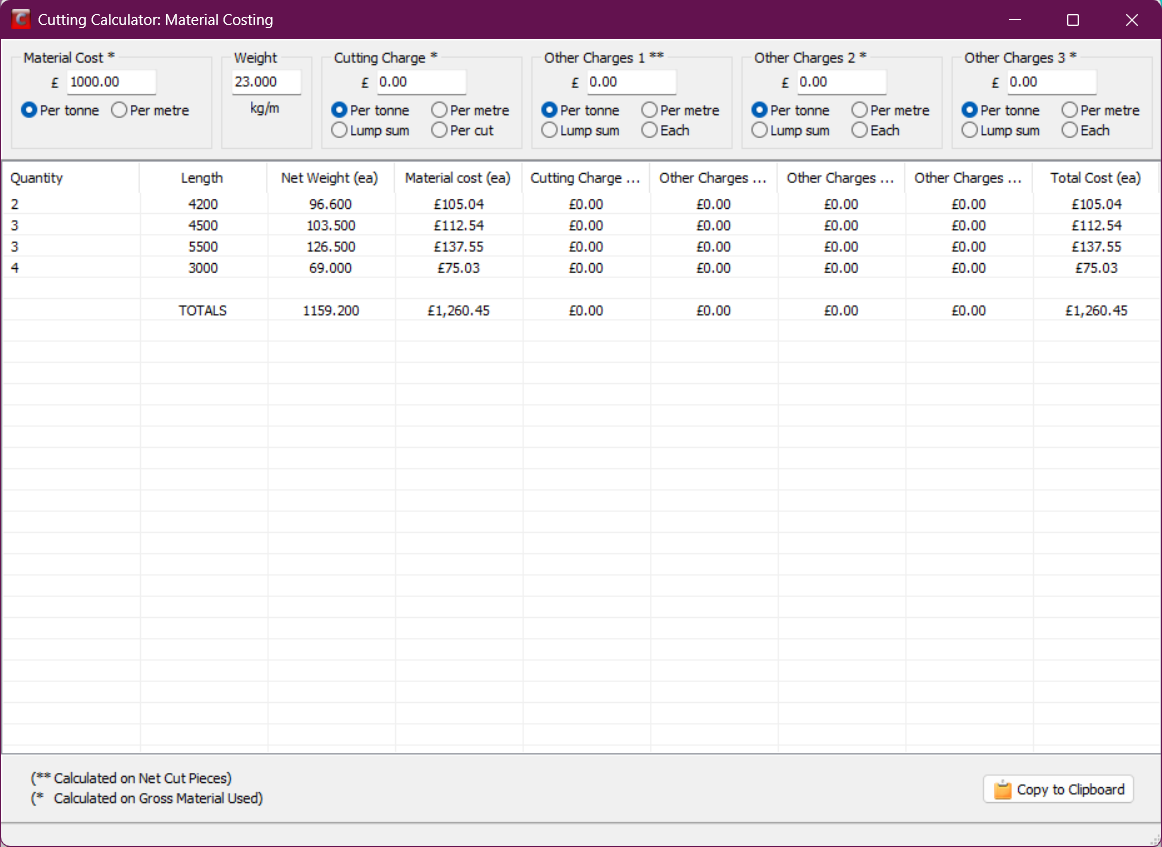
First, let’s try the Lego-brick approach again — no kerf, trim or hold. The results aren’t pretty: five bars consumed, a decent-sized offcut returned to stock, and 4.39 m scrapped. We’d charge the customer for 54.8 m of material.
Adding constraints to the bigger job
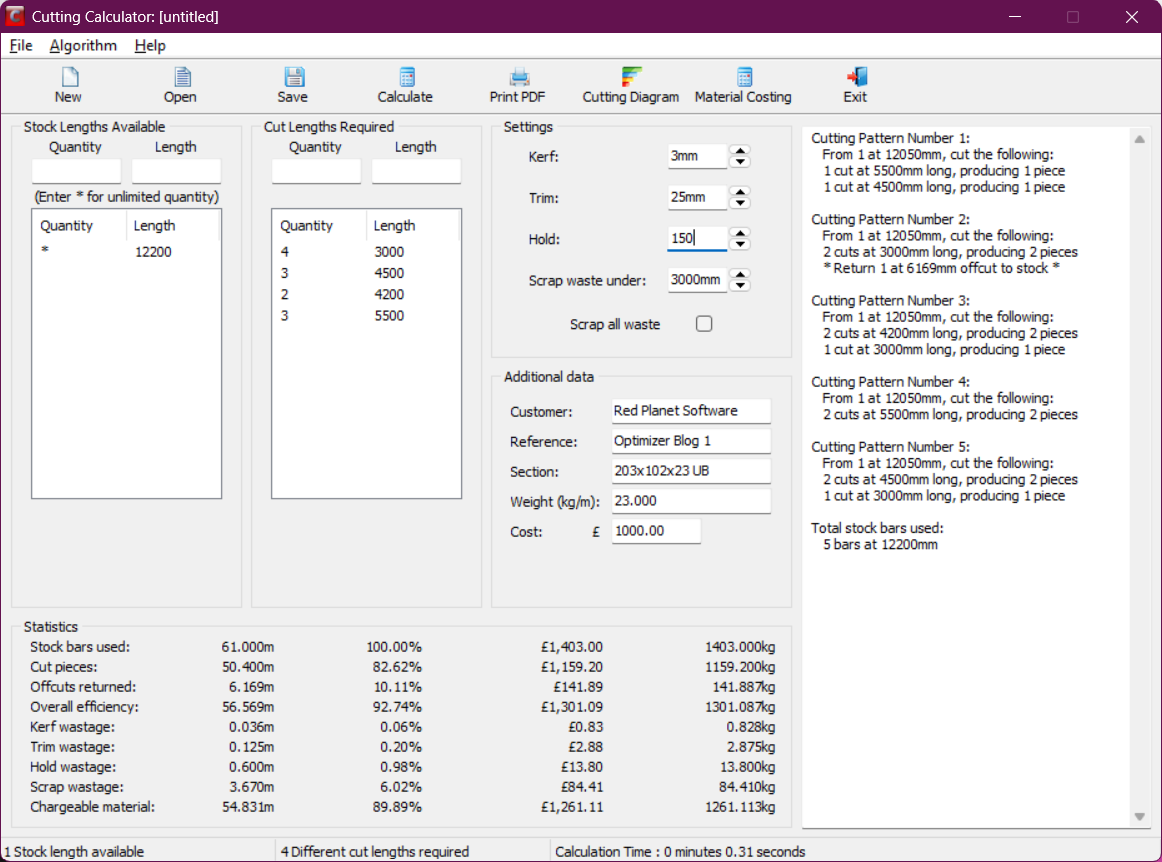
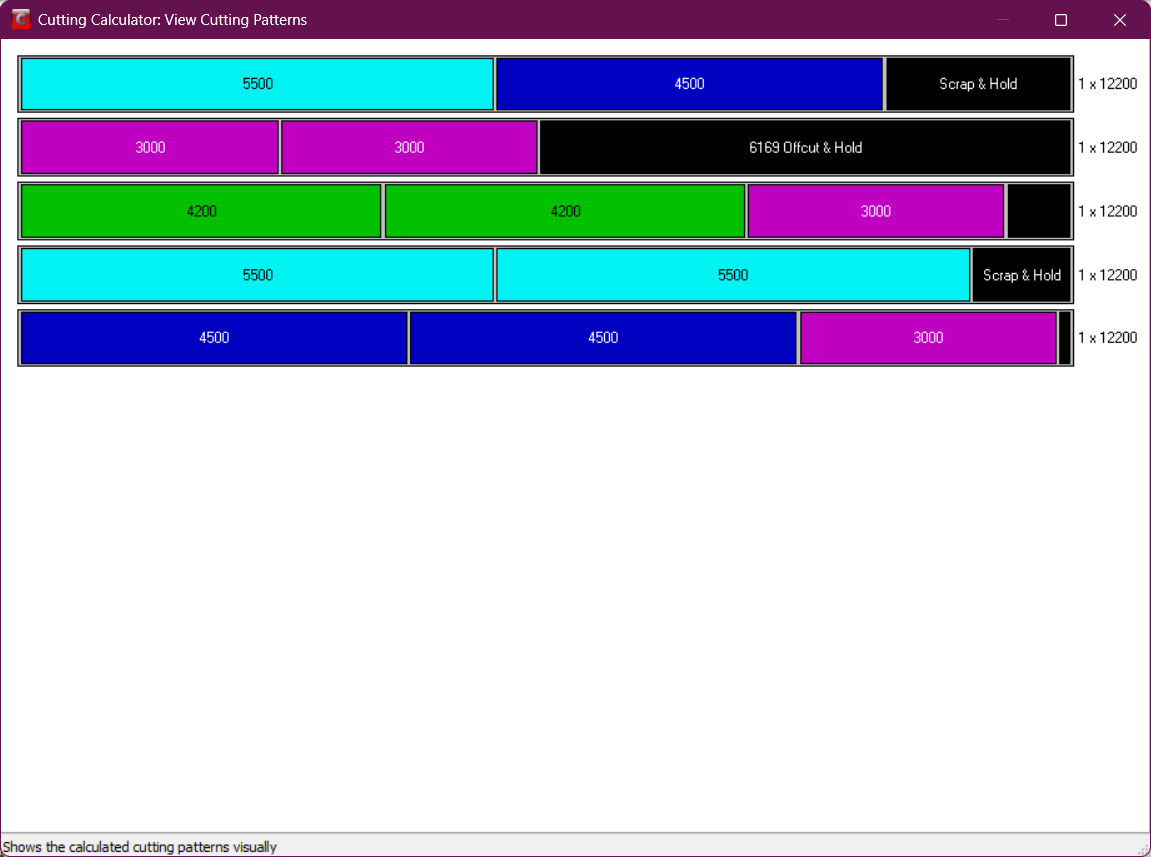
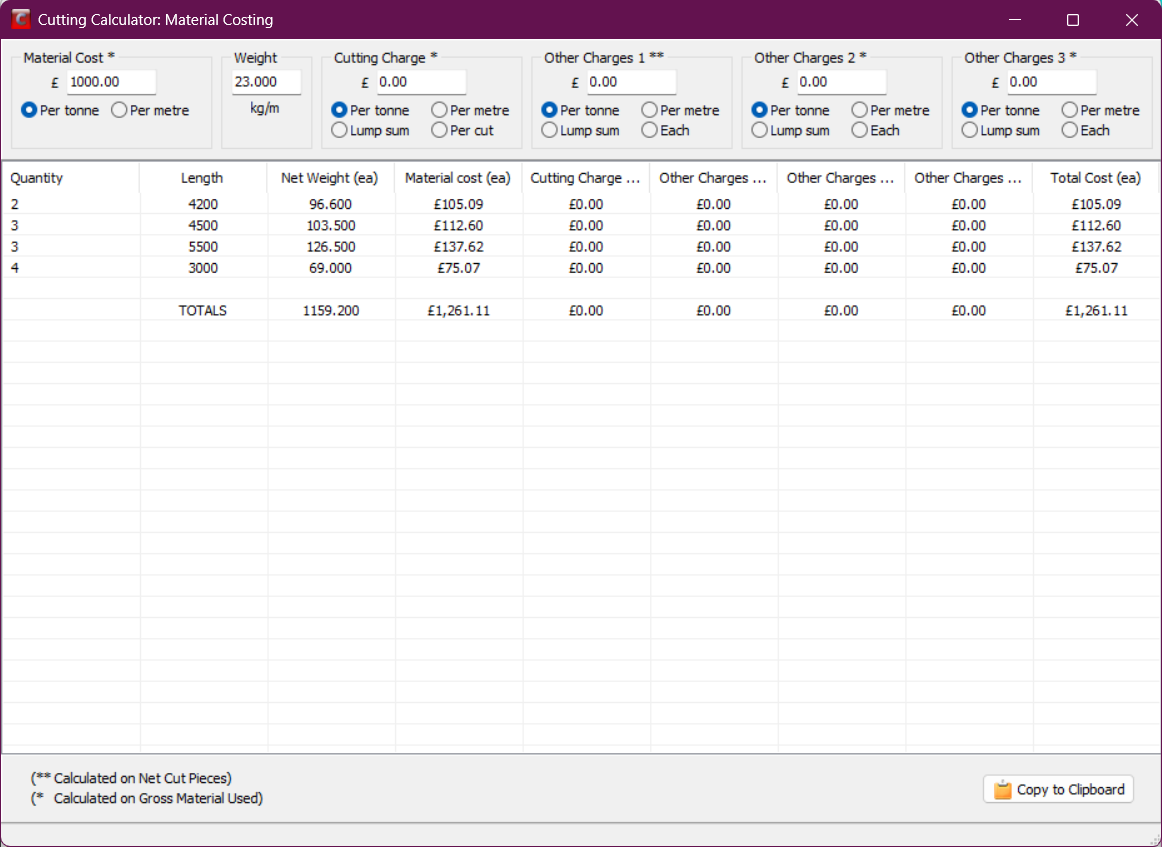
Apply the same kerf, trim and hold settings as before. Because there was already a fair amount of scrap in the Lego result, there’s enough room to absorb the extra allowances without needing another bar. The chargeable material edges up slightly to 54.83 m, and scrap to 4.43 m.
We’re in realistic territory now — but we’re still only using one stock length. Can we do better?
Taking the brakes off
Keeping an offcut or two back is all well and good, but do that on every job and they start stacking up. Customers often want “single cast” orders, so you can’t always incorporate remnants into future work. Small jobs to use them up can be hard to come by. They take up precious rack space, eventually get marked down, and sometimes scrapped entirely. That’s a hidden cost that bites into margins down the line.
In an ideal world, we’d maximise our cutting, minimise waste and offcuts, and charge the customer for exactly what went on the saw.
Can it be done? Yes it can.
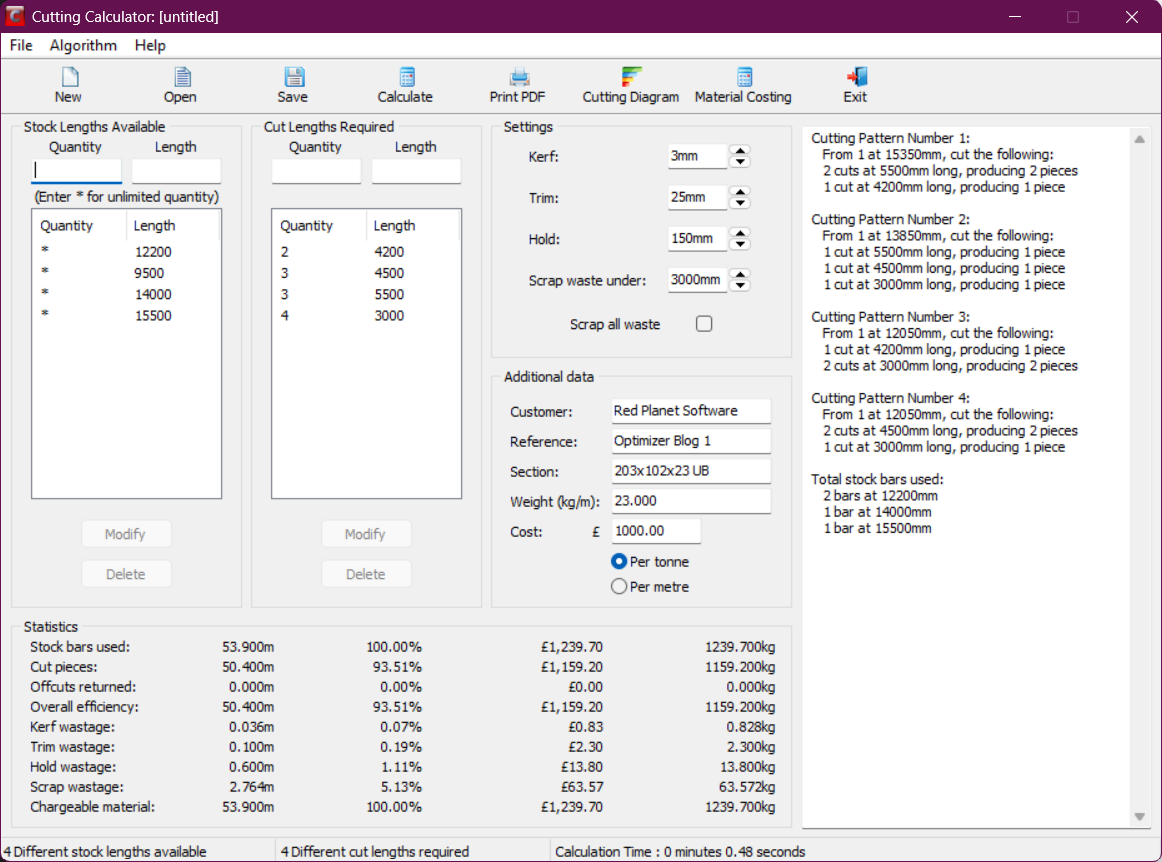
With Cutting Calculator you can explore different available stock lengths and see whether a different mix gives a better result. Let’s say you have access to other sizes — via group stocks, dock stocks or merchants — at 9500 mm, 14000 mm and 15500 mm as well as the existing 12200 mm.
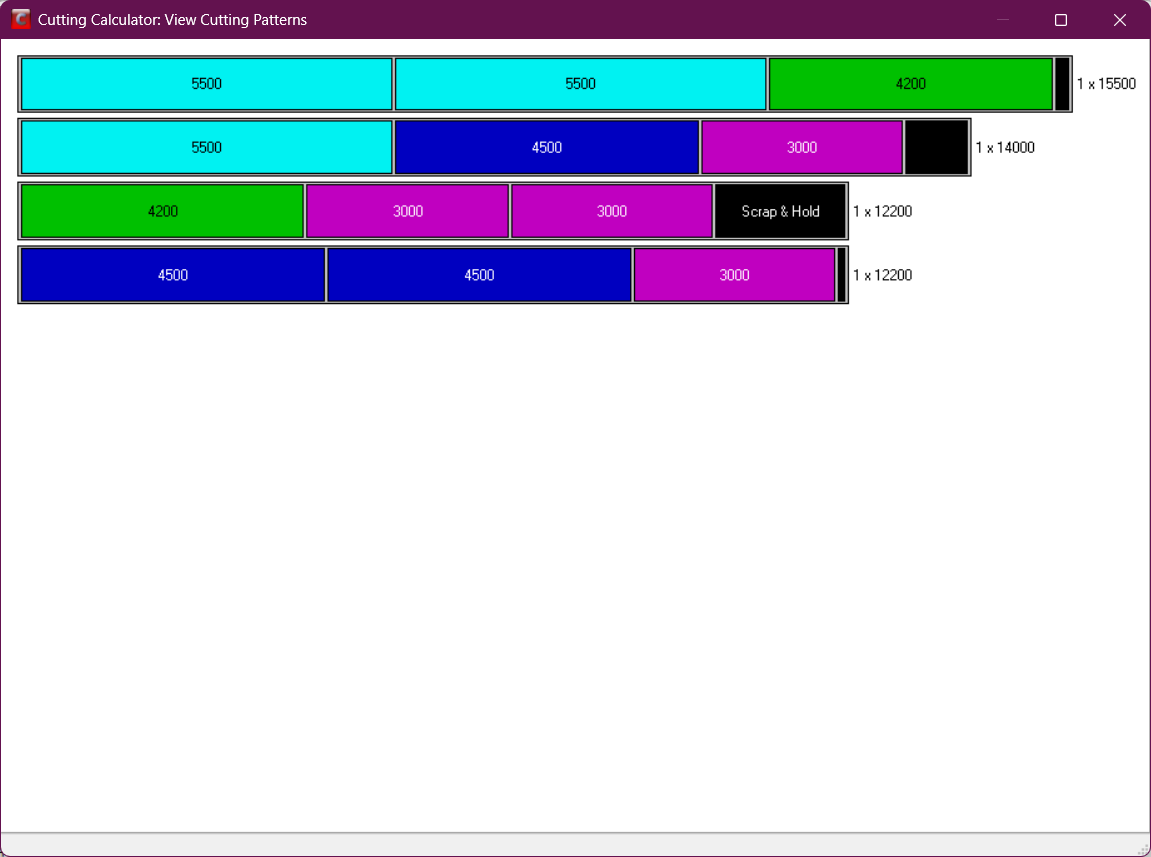
The program works it out in under a second: using 1 × 15500, 1 × 14000 and 2 × 12200 gives a near-perfect result. No offcuts returned, no dead stock, and the chargeable material drops to 53.9 m — a saving of almost a full metre.
What the numbers say
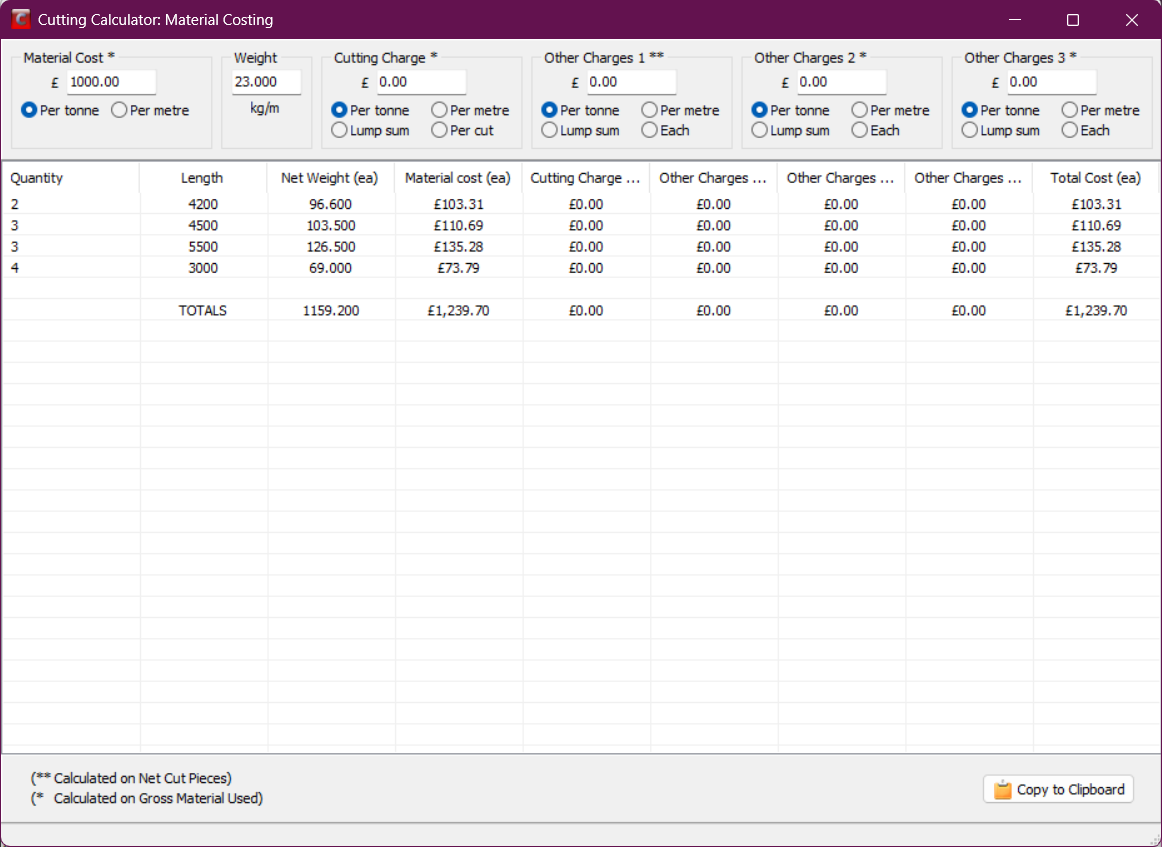
On this single job, the optimised approach saved roughly £21 in material (at £1,000/tonne and 23 kg/m, that’s what a metre of 203×102×23 UB costs). That might not sound like much on its own — but multiply it across a year’s worth of cutting and it adds up fast. More importantly, there are no half-length remnants hanging around taking up rack space and eventually getting scrapped.
And you’re more competitive. Charging for 53.9 m instead of 54.8 m makes your quote sharper without costing you a penny — you’re simply wasting less.
The real saving is time
This calculation took less than half a second. Even allowing for a few permutations and setting changes, for the sake of perhaps 30 seconds’ effort you’ll have found the most competitive and economical way to do the job. No spreadsheet, no mental arithmetic, no trial and error at the saw.
In our next post, we’ll look at a more complex job with tighter constraints — one where the difference between a basic cut and an optimised one is even more dramatic.